Introduction
Modern business campuses—encompassing corporate headquarters, tech parks, and integrated office-industrial hubs—are evolving into smart ecosystems driven by IoT (Internet of Things) innovation. From smart lighting and access control to energy management and video surveillance, these campuses rely on seamless connectivity to streamline operations, enhance employee experiences, and fortify security. However, this digital transformation brings unique challenges: integrating hundreds of IoT devices, ensuring low-latency data transmission, and safeguarding sensitive business data against cyber threats. A robust network solution must be not only IoT-ready to support diverse connected devices but also inherently secure to mitigate risks. This article explores the core requirements of modern business campus networks, outlines key components of an ideal solution, and highlights how tailored infrastructure can unlock efficiency and security for enterprises.
Core Requirements of Modern Business Campus Networks
Business campuses differ from traditional office networks in their scale, diversity of devices, and demand for 24/7 reliability. To meet the needs of smart operations, a campus network must satisfy three critical requirements:
A. IoT Compatibility and Scalability
Modern campuses deploy a wide array of IoT devices—from occupancy sensors and smart thermostats to IP cameras and asset trackers. These devices vary in data rates, power needs, and communication protocols (e.g., Ethernet, Wi-Fi 6). A flexible network must support mass device connectivity (scaling to thousands of endpoints) and accommodate both wired and wireless IoT deployments. For example, wired IoT devices like industrial controllers or high-definition surveillance cameras require stable, high-bandwidth connections, while wireless sensors need reliable coverage across large outdoor or indoor spaces.
B. Low Latency and High Reliability
Campus operations such as real-time access control, video conferencing, and energy management systems depend on low-latency data transmission. Even minor delays can disrupt workflows—e.g., a lag in access control responses may cause bottlenecks at entry points, while delayed sensor data could compromise energy efficiency. Additionally, the network must ensure 99.999% uptime to avoid costly downtime for critical services like employee workstations, cloud-based applications, and emergency response systems.
C. Multi-Layered Security
Business campuses store and transmit sensitive data, including employee information, financial records, and proprietary business data. IoT devices, often with limited built-in security, pose additional vulnerabilities if not properly protected. A secure network must implement defense-in-depth strategies: segmenting IoT traffic from core business networks, encrypting data in transit, and enforcing access controls to prevent unauthorized access. Protection against common threats like malware, phishing, and DDoS attacks is also non-negotiable.
Key Components of an IoT-Ready and Secure Campus Network
Building a network that meets the above requirements requires integrating specialized hardware, software, and protocols. Below are the foundational components:
A. High-Performance Core and Access Switches
The network backbone relies on core switches to handle high-volume data traffic between campus buildings, while access switches connect end devices (computers, IoT sensors, IP phones) to the network. For IoT readiness, access switches should support PoE (Power over Ethernet) (IEEE 802.3af/at) to power IoT devices like cameras and wireless APs, eliminating the need for separate power cables and simplifying deployment. Additionally, switches with Layer 2/Layer 3 management capabilities enable network segmentation, allowing IT teams to isolate IoT traffic and enhance security.
B. Wi-Fi 6/6E Wireless Infrastructure
Wireless connectivity is essential for mobile employees and IoT devices that can’t be hardwired (e.g., asset trackers, portable scanners). Wi-Fi 6/6E offers faster speeds, lower latency, and higher device density compared to previous generations, making it ideal for crowded campus environments. Features like OFDMA (Orthogonal Frequency-Division Multiple Access) and MU-MIMO (Multi-User Multiple-Input Multiple-Output) enable the network to support dozens of concurrent IoT connections without performance degradation.
C. Network Segmentation and VLAN Technology
Segmenting the campus network using VLANs (Virtual Local Area Networks) is a cornerstone of security. By dividing the network into logical subnets (e.g., one for employee workstations, one for IoT devices, one for guest Wi-Fi), IT teams can restrict traffic flow between segments. For example, even if an IoT camera is compromised, the attacker cannot access the core business network containing sensitive data. Advanced segmentation tools like private VLANs add an extra layer of isolation for high-risk devices.
D. Integrated Security Tools
A secure campus network requires end-to-end security solutions, including:
- Next-Generation Firewalls (NGFWs): Filter traffic based on application, user, and content, blocking malicious activity and enforcing security policies.
- Intrusion Detection/Prevention Systems (IDS/IPS): Monitor network traffic for suspicious behavior and automatically block potential threats.
- Network Access Control (NAC): Verify the identity and security posture of devices before allowing them to connect to the network, ensuring IoT devices are patched and compliant with security standards.
- Encryption Protocols: Use WPA3 for wireless networks and TLS 1.3 for data in transit, preventing eavesdropping and data tampering.
E. Centralized Network Management
With hundreds of devices and multiple network segments, centralized management is critical for efficiency. Tools that support unified network visibility allow IT teams to monitor traffic, troubleshoot issues, and update configurations from a single dashboard. Compatibility with SNMP (Simple Network Management Protocol) and cloud-based management platforms enables remote monitoring and maintenance, reducing the need for on-site interventions.
Addressing Campus-Specific Challenges with Tailored Solutions
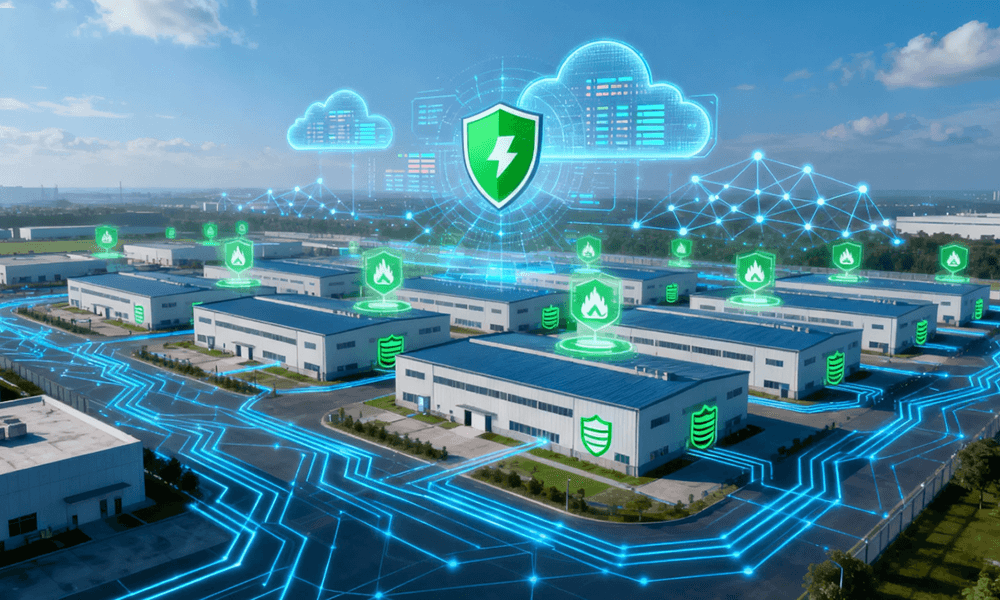
Modern business campuses face unique hurdles that require customized network strategies:
A. Coverage Across Large or Dispersed Campuses
Campuses with multiple buildings or outdoor spaces need seamless connectivity without dead zones. This can be achieved by deploying a distributed access architecture, where access switches and Wi-Fi APs are strategically placed to cover indoor and outdoor areas. Fiber optic cables connect core switches between buildings, ensuring high-speed, low-latency communication over long distances.
B. Balancing IoT Growth and Network Stability
As campuses add more IoT devices, the network must scale without compromising performance. Modular switches allow IT teams to add ports as needed, while software-defined networking (SDN) provides flexible traffic management. Additionally, implementing QoS (Quality of Service) policies prioritizes critical traffic (e.g., video conferencing, emergency alerts) over non-essential data (e.g., IoT sensor status updates), ensuring consistent performance for key operations.
C. Compliance with Industry Regulations
Many industries (e.g., finance, healthcare, education) have strict data security regulations (e.g., GDPR, HIPAA, FERPA). A compliant campus network must include features like audit logging, data encryption, and access control to meet these requirements. Regular security audits and penetration testing help identify vulnerabilities and ensure ongoing compliance.
The Role of Industrial-Grade Hardware in Enhancing Campus Network Resilience
While traditional campus networks often rely on commercial-grade hardware, industrial-grade network devices—especially switches—offer unique advantages for modern smart campuses, particularly in mixed office-industrial environments or areas with harsh conditions (e.g., outdoor facilities, server rooms with extreme temperatures). These devices are engineered for durability, reliability, and long-term performance, making them an ideal complement to standard campus infrastructure.
For instance, industrial-grade managed POE switches are designed to support the demanding needs of IoT-heavy campuses. They offer wide-temperature operation (-40~+85℃), ensuring stability in unconditioned spaces like warehouses or outdoor equipment enclosures—areas where commercial switches may fail due to heat or cold. With robust PoE output (supporting IEEE 802.3af/at), they can power dozens of IoT devices (cameras, sensors, APs) simultaneously, simplifying deployment across large campuses. Additionally, features like ERPS ring network support (with 20ms self-healing time) and dual power redundancy ensure uninterrupted connectivity, critical for campus security and operations.
These industrial-grade solutions not only enhance network resilience but also reduce total cost of ownership (TCO) by minimizing downtime, lowering maintenance costs, and supporting long-term IoT scalability—key considerations for businesses looking to future-proof their campus infrastructure.
Conclusion
Modern business campuses require network solutions that are both IoT-ready and secure to support smart operations, enhance efficiency, and protect sensitive data. By integrating high-performance switches, Wi-Fi 6/6E, network segmentation, and industrial-grade hardware, enterprises can build a resilient infrastructure that meets current needs and scales for the future. Key to success is prioritizing scalability, low latency, and multi-layered security, while following best practices like needs assessment, security-first design, and centralized management. With the right network in place, business campuses can unlock the full potential of IoT innovation while maintaining the security and reliability critical to business success.
References
- Cisco. (2024). Smart Campus Network Design Guide. Cisco Systems.[1]
- IEEE. (2023). IEEE 802.3af/at PoE Standards. Institute of Electrical and Electronics Engineers.[2]
- FS. (2024). Campus Network Solutions for IoT and Security. FS Technology.[3]
- Gartner. (2023). Forecast: IoT Devices in Business Campuses, 2023-2027. Gartner, Inc.